Vancouver gives people no shortage of visual inspiration. Stanley Park, Whistler, the Sea-to-Sky Highway, the North Shore, ocean light, forest texture, and mountain weather all translate naturally into wall art. AI image generation adds another layer: customers can create artwork inspired by those places without needing the perfect photo first.
That is powerful for custom canvas printing. A customer might want a calm coastal abstract for a bedroom, a mountain-inspired landscape for a living room, a stylized pet portrait, or a family collage that feels like the West Coast rather than a standard photo grid. AI can help create the direction. Canvas printing turns that direction into a physical piece.
In this guide
- Why The Starting Path Matters
- Plan The Wall Before The Prompt
- Using The AI Studio
- Prompting For Canvas Printing
- When Collage Is The Better Tool
- Check The File Before Ordering
- Local Use Cases And Practical Choices
- A Better Step By Step Workflow
- Final Pre Print Checks
- Common Questions
- Materials Still Decide The Final Result
- Final Takeaway
Why The Starting Path Matters
Canvas Prints Vancouver gives customers several ways to begin. They can upload a real photo, create with AI, build a collage, or browse ready-made artwork. Those options are useful because not every project should be generated. A personal photo from a hike or wedding should often be preserved. A mood-based decor piece may be better created with AI. A memory board may need collage.
Useful starting points include the AI Studio, the AI Collage Builder, the option to upload your image, and the Art Gallery for finished artwork.
Plan The Wall Before The Prompt
Vancouver customers should think about atmosphere before prompt details. Is the piece meant to feel misty, bright, dramatic, minimal, organic, modern, or warm? A vague prompt like “forest landscape” can create many different results. A stronger prompt might ask for a wide coastal forest landscape, soft morning fog, deep green cedar tones, ocean light in the distance, calm composition, designed for a large canvas print.
The canvas size and pricing guide is useful here because AI artwork should be shaped around real canvas sizes, not forced into a size after the image is finished.
Using The AI Studio
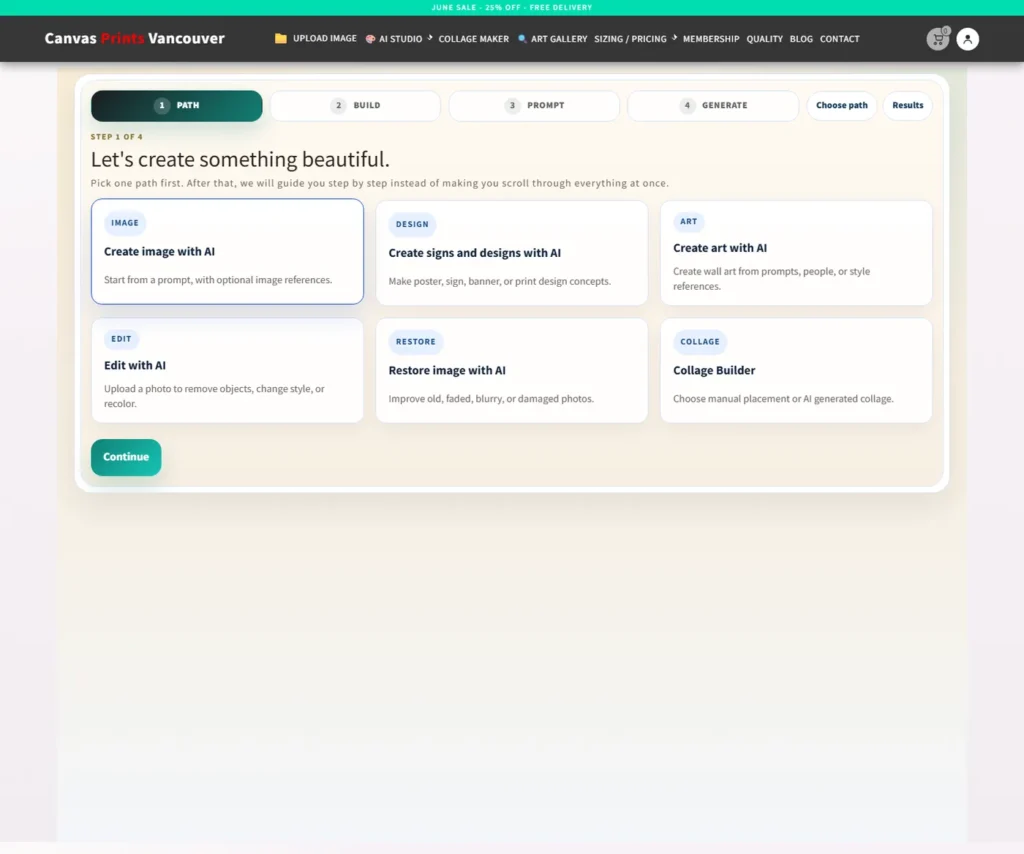
The AI Studio makes this easier by guiding customers through different project paths. Image creation, design, art, editing, restoration, and collage are separated before the user writes the detailed prompt. That structure keeps the tool approachable and prevents one project type from being confused with another.
Prompting For Canvas Printing
Ratio is especially important for scenic Vancouver-inspired work. A panoramic mountain or ocean piece can lose its effect if forced into a square. A portrait-style forest path may look awkward as a wide print. Before generating, choose the likely wall and canvas shape. A print above a couch, a hallway piece, and a gallery-wall square all need different image planning.
When Collage Is The Better Tool
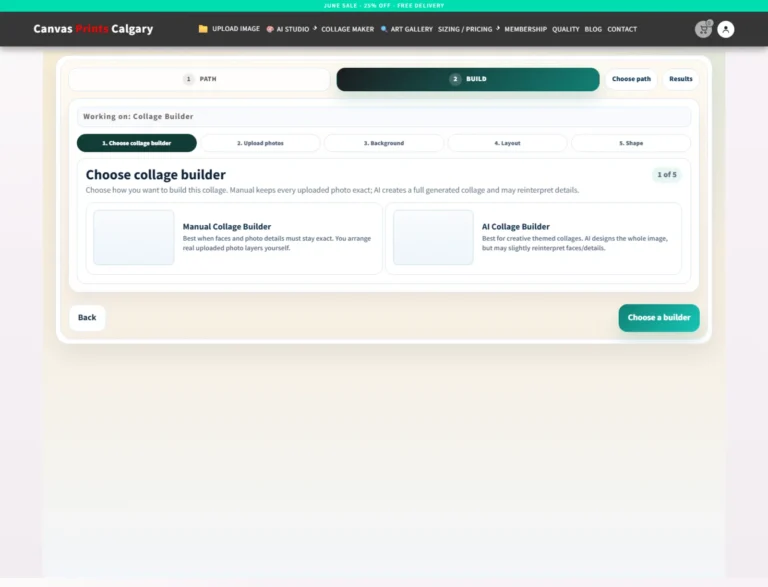
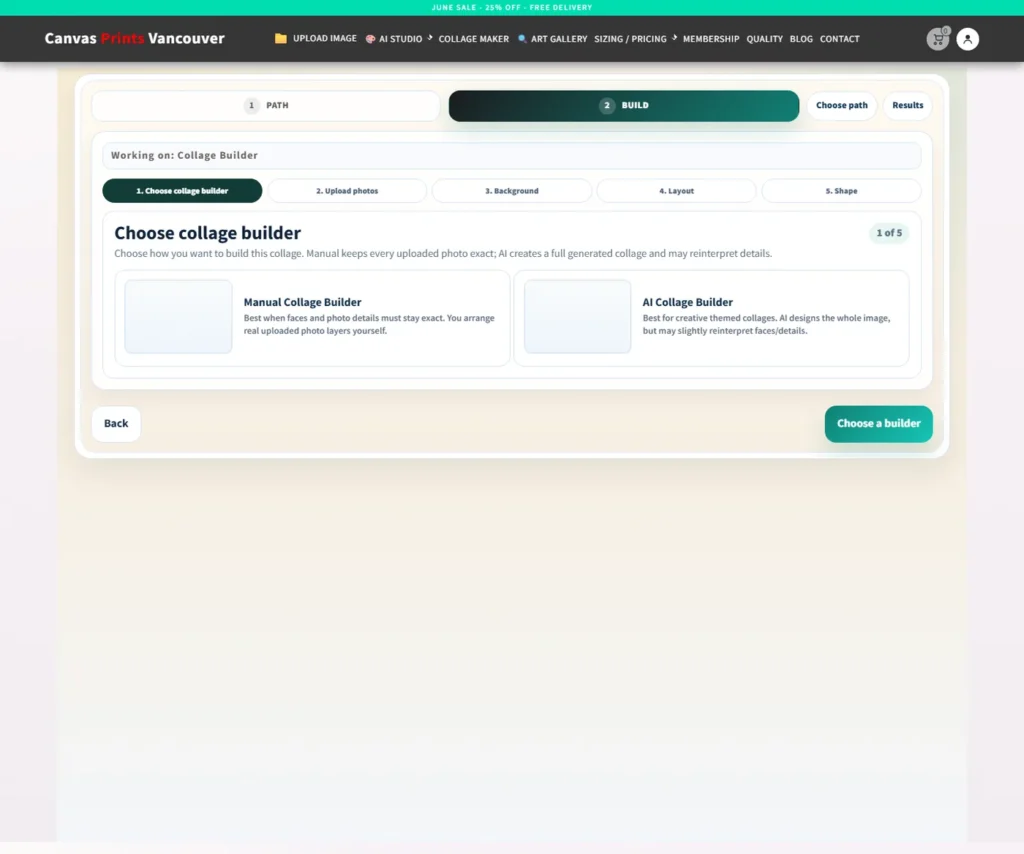
The collage builder is useful for travel and family stories. A customer may have photos from Whistler, ferry trips, Stanley Park, a wedding, or a pet adventure. Manual collage keeps the uploaded images exact, while AI collage creates a more interpretive composition. That choice matters. If exact memories are the priority, keep control. If atmosphere is the priority, let AI help connect the images.
Check The File Before Ordering
Before printing, review the file closely. AI can create beautiful scenes with small mistakes: odd railings, strange text, repeated trees, warped hands, or unnatural faces. These issues are easier to forgive in a quick digital preview than on a large canvas. Check the image at full size and make adjustments before ordering.
Local Use Cases And Practical Choices
Vancouver artwork often depends on atmosphere: mist, ocean light, forest greens, mountain silhouettes, rain-softened streets, and warm interiors against grey weather. AI can create those moods quickly, but the prompt should be specific about the feeling. “West Coast landscape” is broad. “Soft coastal forest with morning fog, muted greens, calm ocean light, clean foreground, wide canvas composition” is more print-aware.
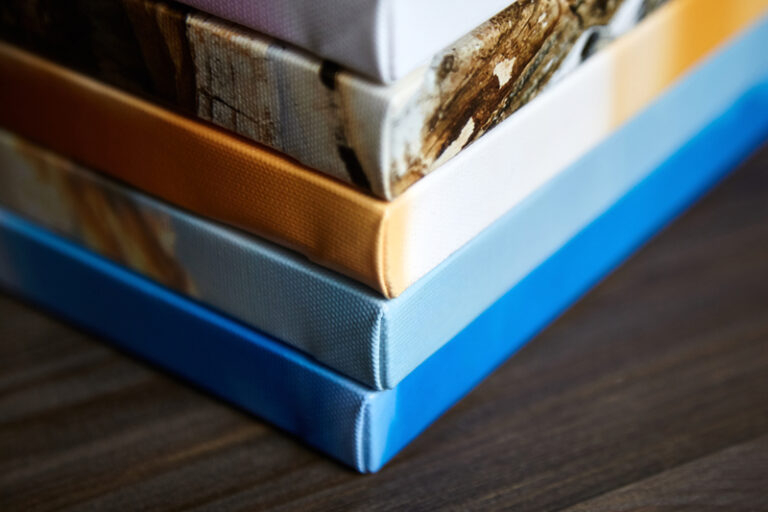
Coastal homes also make material quality more important. Humidity and changing indoor conditions are not friendly to weak canvas, poor frames, or unfinished prints. A generated image may be new technology, but it still benefits from traditional production standards: proper stretching, stable materials, and protective coating.
For scenic images, ratio can make or break the piece. Mountains and ocean views often want width. Forest paths and architectural details may prefer vertical composition. A square image can work well for a gallery wall but may not capture a sweeping landscape. Prompting with the final ratio in mind helps preserve the subject.
AI can also help Vancouver customers create artwork that is inspired by local places without directly copying a specific photo. That is useful when a customer wants the feeling of Whistler, the North Shore, or a ferry trip but does not have a print-quality image. The prompt can describe the mood and environment while still creating something original.
For family and travel collages, exactness matters. If the photos are the memory, keep them exact with manual collage. If the photos are references for a broader art piece, AI collage can reinterpret them into a more atmospheric design. Choosing between those two paths prevents disappointment.
Colour should be reviewed carefully. Vancouver-inspired prompts can become very dark or overly green if the AI leans too hard into forest and rain. A print-ready version often needs balanced highlights, enough sky or negative space, and clear contrast so the canvas does not feel heavy on the wall.
For apartments and smaller homes, the artwork should not overwhelm the room. A calm print with limited colours can make a space feel larger, while a busy generated scene can dominate. AI prompts should mention simplicity, room decor, and viewing distance when the canvas is intended for a compact space.
The best Vancouver AI canvas prints feel atmospheric but controlled. They use the city’s natural character as inspiration, then rely on good print choices to make the image durable, readable, and suitable for the actual wall.
A Better Step By Step Workflow
A useful Vancouver workflow starts with mood because the same subject can feel completely different depending on light. A forest can feel peaceful, dark, cinematic, rainy, bright, or minimal. A coastal scene can feel dramatic or calm. AI prompts should name the atmosphere first, then the subject, so the result fits the room rather than becoming a generic landscape.
The second step is preventing scenic clutter. Vancouver-inspired prompts can easily include mountains, ocean, forests, fog, wildlife, city lights, ferries, and rain in one image. That may sound rich, but it can overwhelm a canvas. A cleaner prompt with one main environment and one clear focal point usually prints better and feels more sophisticated.
The third step is choosing colours that will live well indoors. Deep greens and blues are natural for West Coast artwork, but too much darkness can make a canvas feel heavy. Adding soft highlights, warm interior-friendly tones, or open sky can help the finished print feel balanced. The image should still feel local without turning the room cold.
The fourth step is thinking about humidity and longevity. The generated file may be digital, but the finished canvas lives in a real coastal environment. Material quality, stretching, coating, and frame stability are not abstract details. They affect whether the artwork continues to look finished after it has been hanging for a while.
The fifth step is deciding whether the image should represent a place or simply borrow its feeling. A customer may not need an exact Stanley Park or Whistler image. They may want the feeling of trees, mist, mountains, and water in a way that suits a bedroom or living room. AI is well suited to that kind of atmosphere-driven art.
The final step is comparing the generated image against the actual wall. Vancouver homes and apartments often use natural materials, plants, soft neutrals, and large windows. A print that looks dramatic by itself may compete with the room. A calmer version with fewer elements may become the piece that actually belongs.
Final Pre Print Checks
Vancouver customers should check that the image is not too dark before printing. Forest, rain, and mountain prompts can create beautiful atmosphere, but a canvas does not glow like a screen. Adding soft sky, reflected water, or warm highlights can make the final print easier to live with.
Edge space is also important for scenic images. A mountain peak, shoreline, or tree line placed too close to the border may look awkward once wrapped. Leave room around the main subject so the canvas feels intentional from the front and sides.
For apartments, the artwork should support calm rather than crowd the room. A simplified coastal image or quiet abstract may work better than a dense scene with many tiny details. The prompt should mention clean composition if the wall is small.
For gifts, local atmosphere can be more meaningful than literal landmarks. A print inspired by mist, ocean, cedar, and mountain light may feel personal without relying on a recognizable tourist view.
For multiple prints, consistency is key. A hallway or living room set can use the same muted palette and atmospheric style while changing the subject from forest to water to mountain. AI is useful for building that kind of related series.
The final Vancouver test is whether the canvas feels natural in the room. If the image carries West Coast atmosphere but still has enough clarity, brightness, and material quality, it can become a lasting piece rather than a passing AI experiment.
Common Questions
What AI styles work well for Vancouver canvas prints?
Atmospheric landscapes, coastal abstracts, soft forest scenes, muted botanical designs, and calm mountain-inspired artwork can work very well. The key is keeping the image bright enough and not overloading it with too many scenic elements.
Should Vancouver customers worry about canvas materials?
Yes. Coastal conditions make stable materials and protective finishing important. A generated image should still be printed on canvas and framing that can hold up in a real home environment.
Can AI create West Coast artwork without copying a photo?
Yes. A prompt can describe mist, cedar tones, ocean light, mountains, rain-softened colour, or calm natural texture. That creates artwork inspired by the region without depending on one specific photograph.
How can Vancouver customers avoid overly dark AI prints?
Ask for soft highlights, open sky, reflected water, warm interior-friendly tones, or balanced contrast. Dark forest and rain prompts can look beautiful on screen but may need more light for canvas.
What canvas ratios work best for scenic Vancouver art?
Wide landscape ratios suit mountains, ocean, and skyline-inspired artwork. Portrait ratios can work for forest paths or architectural details. Square prints are useful for gallery walls and smaller spaces.
Is AI collage useful for Vancouver travel memories?
Yes, when the goal is to combine several trips, hikes, ferry rides, or family moments into one themed piece. Use manual collage for exact memories and AI collage for a more atmospheric interpretation.
How should Vancouver customers choose colours for AI canvas art?
Start with the room, not only the scenery. Coastal greens and blues are natural choices, but adding cream, warm grey, soft wood tones, or gentle highlights can make the finished canvas easier to pair with real furniture and lighting.
Materials Still Decide The Final Result
Material quality has a Vancouver-specific angle too. Coastal humidity makes cheap canvas, thin frames, and weak finishing less appealing over time. Canvas Prints Vancouver emphasizes cotton canvas, archival-style pigment inks, hand-stretching, and protective finishing. Those details help the print feel durable rather than temporary.
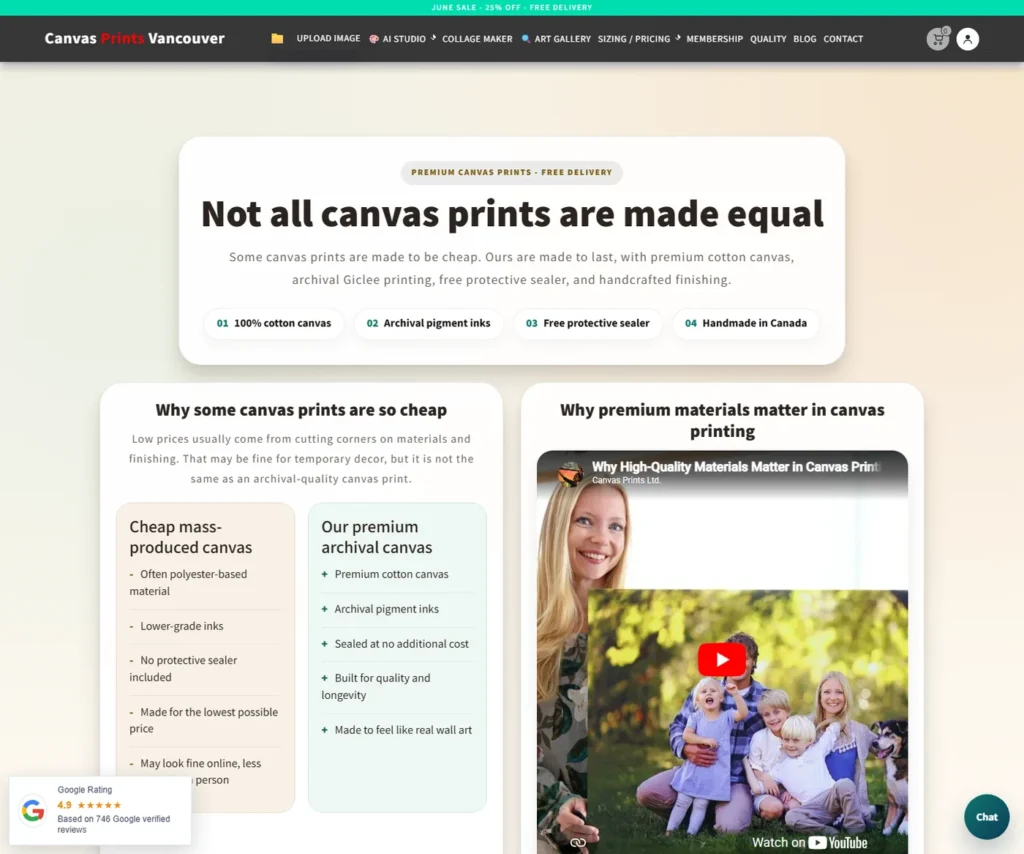
The size, pricing, and materials page explains why canvas, inks, coating, and finishing matter when a digital image becomes a physical print.
Final Takeaway
AI image generation works best when it respects the final medium. For Vancouver customers, that means using AI to capture mood and place, then using print judgment to choose the right size, ratio, and materials. The result can be artwork that feels personal, local, and finished enough to live on the wall for years.
For more practical print ideas, visit the blog or begin a new project in the AI Studio.